
Margins are only real if your cost basis is
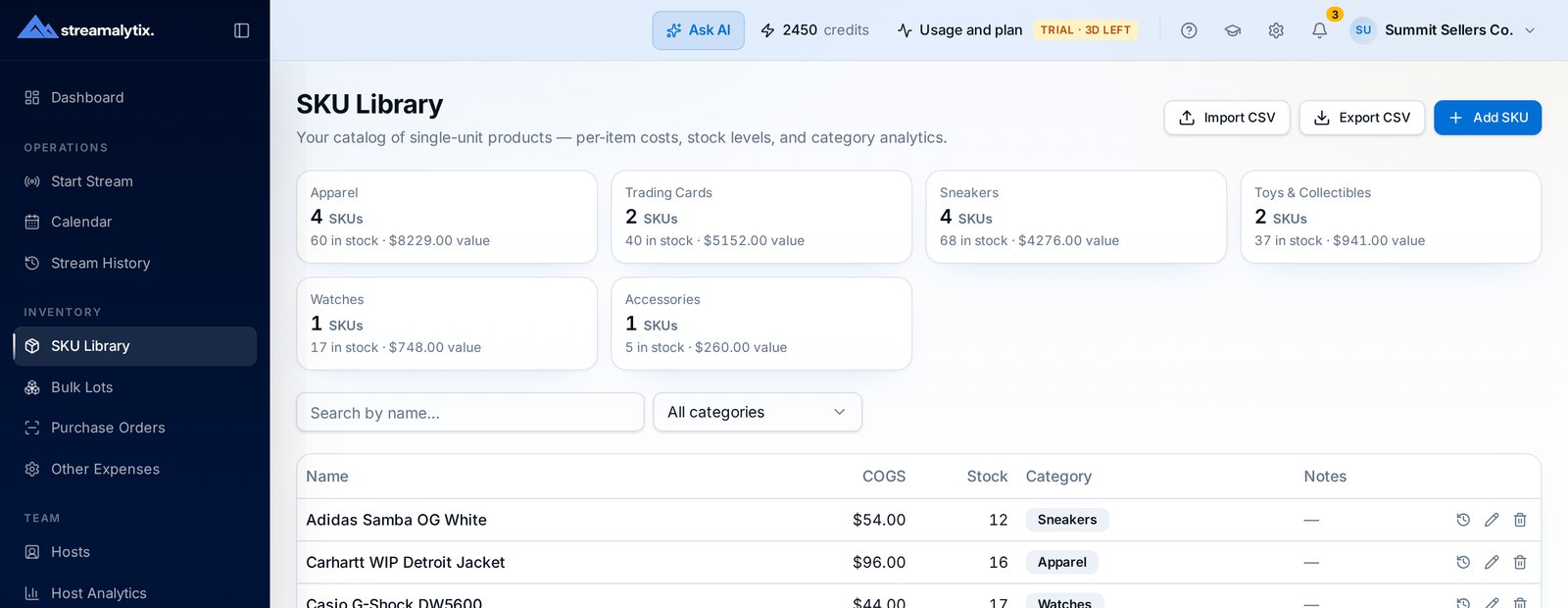
SKUs for individual items, bulk lots for pallets and mixed cases, landed cost including freight, and a cost snapshot on every sale so no restock can quietly rewrite last month's profit.
- SKUs and bulk lots side by side
- Freight and fees allocated proportionally
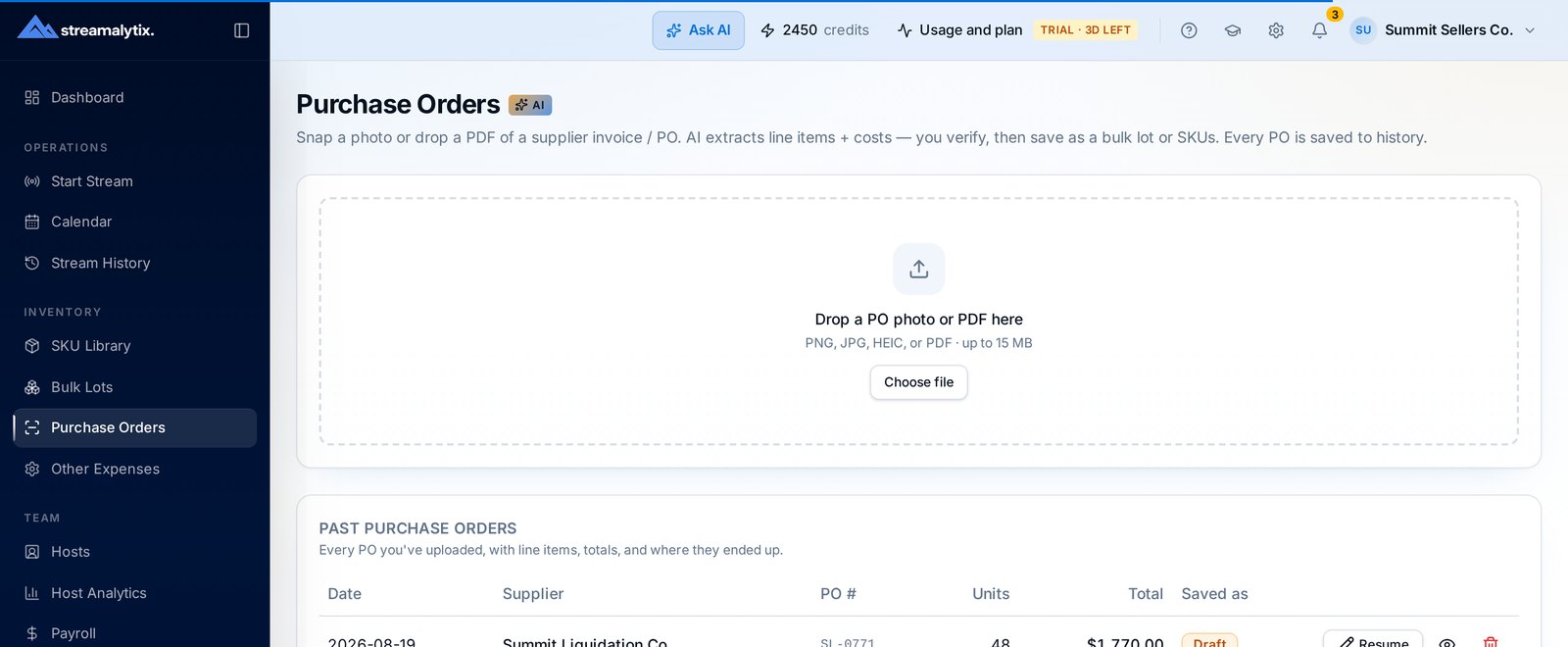
- AI purchase order and invoice upload
- Cost snapshotted at time of sale
3-Day Free Trial · 30 Logging Credits Included · No Card Required
From a pallet in the garage to costed sales
Set inventory up once and every stream afterwards produces trustworthy margins.
- Step 01
Bring cost in
Add SKUs manually or upload a purchase order and let the parser build the lines, allocating freight across units by value or quantity.
- Step 02
Organise it
Categorise with the built-in library, add aliases for the names buyers and hosts actually use, and set expected sell prices.
- Step 03
Sell and draw down
Every logged sale reduces remaining units and locks that unit's cost to the sale, feeding margin instantly.
Two inventory models, because live sellers buy both ways
A graded card and a pallet of returns are not the same asset. Streamalytix treats them differently while still producing one comparable margin number.
- SKUs for identifiable, repeatable items with a known unit cost
- Bulk lots for cases, pallets and bins with a blended unit cost
- Remaining-unit tracking with over-sell protection
- Cost history per SKU so price changes never rewrite the past
Upload the invoice, get inventory back
Typing a 60-line purchase order is the reason most sellers stop tracking cost. Upload the document instead and review what the parser produced.
- AI extraction of line items, quantities and unit costs
- Freight and handling allocated proportionally, not averaged flat
- Supplier records so you can compare sources over time
- Everything editable before it commits to your catalogue
Details that keep the catalogue clean
Alias manager
Add also-known-as names per SKU and lot, with source tags so you can see whether you added it or a verified identifier did.
Identifier-first matching
UPC, barcode and cert numbers take priority over name guessing, so learned matches stay trustworthy.
Bulk editing
Update costs, categories and prices across many lines at once instead of one dialog at a time.
Low-stock signals
Notifications when remaining units on a lot or SKU drop below your threshold.
Cost history
Every cost change is versioned, so a report from six weeks ago still reflects what you actually paid then.
Category library
Over 200 curated categories keep product analytics comparable instead of a pile of one-off labels.
Straight answers
If something isn't covered here, the team replies within a business day.
No. Single items work as SKUs, and everything you bought as a mixed case, pallet or bin becomes a bulk lot with a blended per-unit cost. Both produce a real cost basis.
Get a cost basis you'd defend to an accountant
Upload one purchase order during the free trial and see your next show report with real margins.
